Robocup 2025 Salvador - Day 5
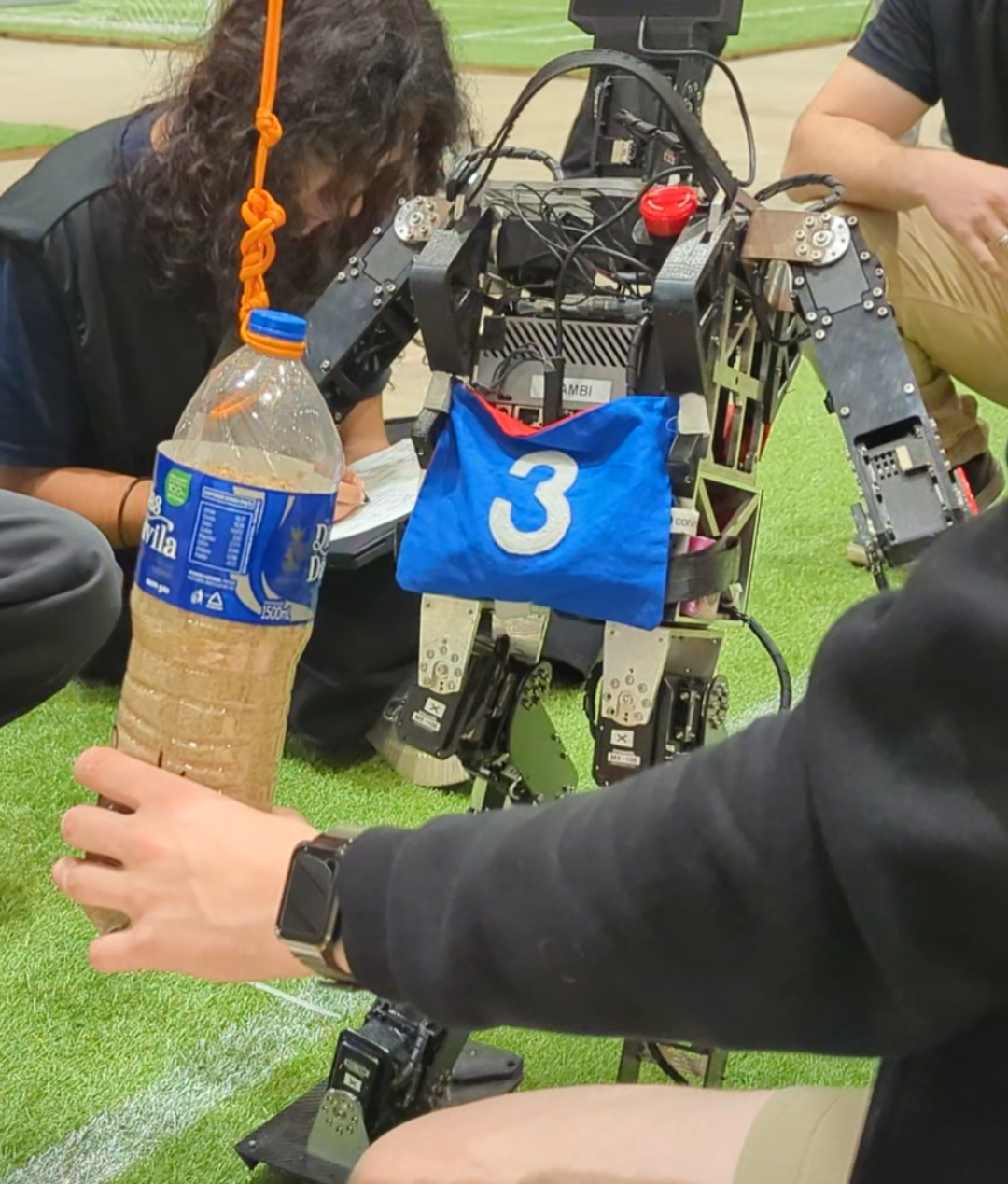
The fifth day began with the Technical Challenges, an additional discipline within the competition in which Humanoid League teams can take part voluntarily. In various tasks such as Push Recovery or Parkour, specific abilities of the robots are tested. This year we competed in the Push Recovery Technical Challenge and were convincing: our robot showed high stability against external disturbances while walking in place, and thereby achieved 2nd place in this discipline and thus 2nd place in the overall ranking. This robustness is the result of various improvements, such as the use of a newer IMU and an additional control loop that we implemented this year. The changes had a positive effect not only in the challenge, but also in regular game play through a significantly more stable gait.
In the afternoon, the quarterfinal game against TH-MOS (China) was on the schedule. It was already clear beforehand: this team is among the favorites – not least because of their new platform (Booster robots). TH-MOS had already stood out during the tournament through a very aggressive style of play and repeated rule violations, which had led to considerable hardware failures at several teams. Nevertheless, we decided to put our robots on the field against this team. In the previous games, our robots had already proven comparatively robust, so we assumed that the robots would survive our opponent’s tackles.
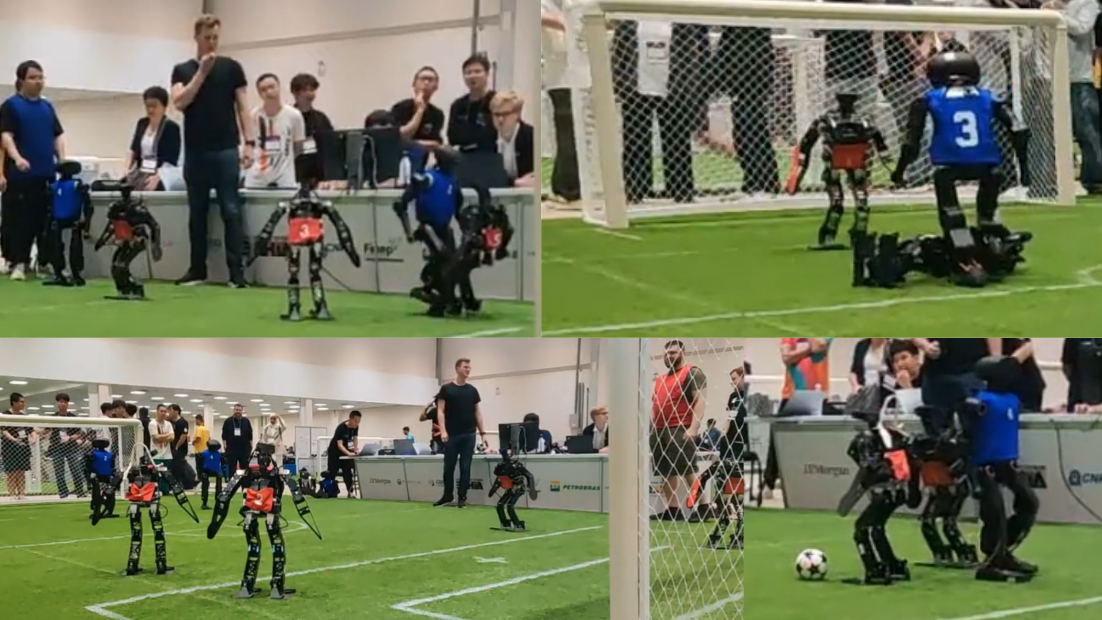
As in the game against Boosted HTWK (Germany), we put our focus on a defensive style of play and put all four robots on the field. Already in the first minute, Gambi (robot number 3) was knocked over illegally by two TH-MOS robots – both received a warning and thus a 10-second time penalty. Two warnings lead to a yellow card, and two yellow cards in turn lead to a red card and the removal of the robot. The first half went exactly as planned: goalless. However, our robots had to endure hard hits, but were able to take them well. So at the start of the second half, not only were many Brazilian spectators there again, but also members of other teams who didn’t want to miss the game. As the game went on, our opponents collected a total of 14 warnings, while we got only one. This number meant that three TH-MOS robots, each with a yellow card and a warning, were just short of a red card, and one robot had a yellow card. TH-MOS deliberately took their robots off the field, especially in the second half, to avoid red cards, and even made their substitute robots ready for play just in case. Compared to other games with Booster robots, the second half was low-scoring but unfortunately not goalless, so we lost with a final score of 0-3. Nevertheless, we were very satisfied with the result: the low number of goals conceded and the stability of our robots surprised not only us, but also many other teams. This showed how much we have improved our robots over the last few years. At the end of the game, we had only one defective motor and a few badly bent steel shoulder parts to account for. Two years ago, a game with four robots on the field permanently would have been barely conceivable for us.
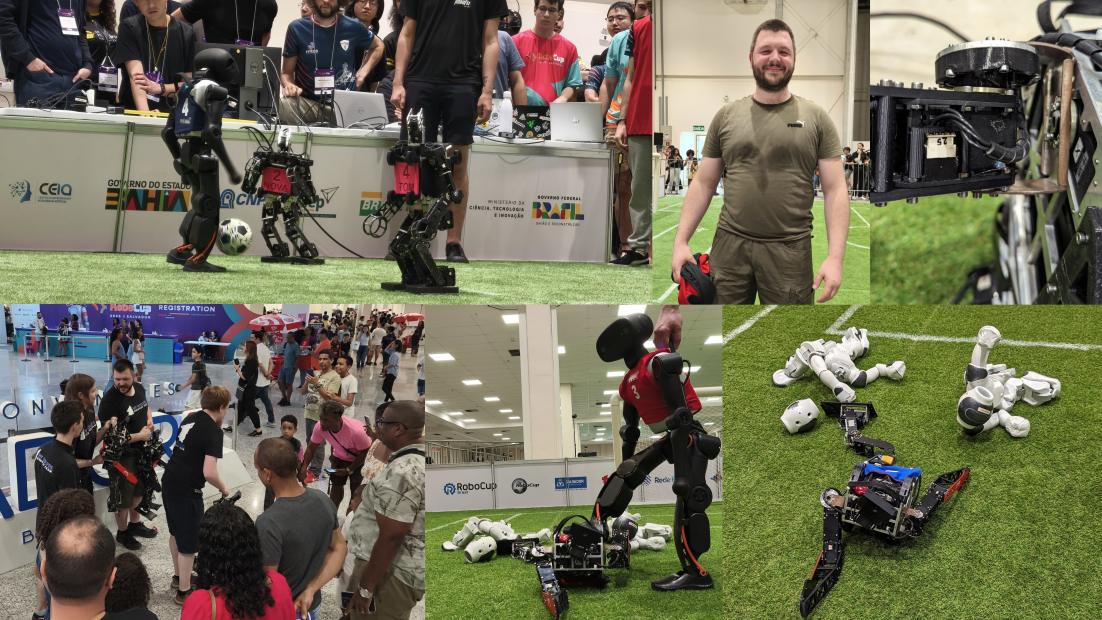
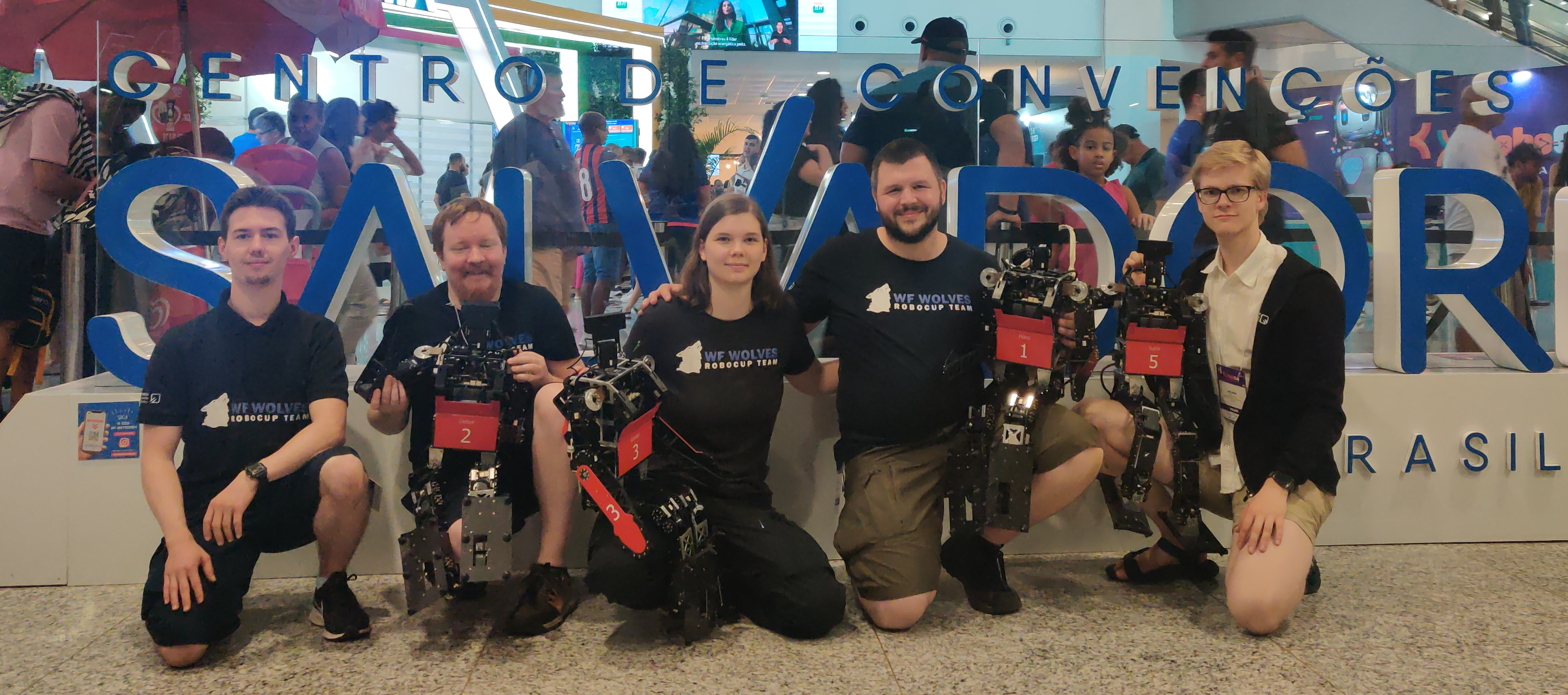
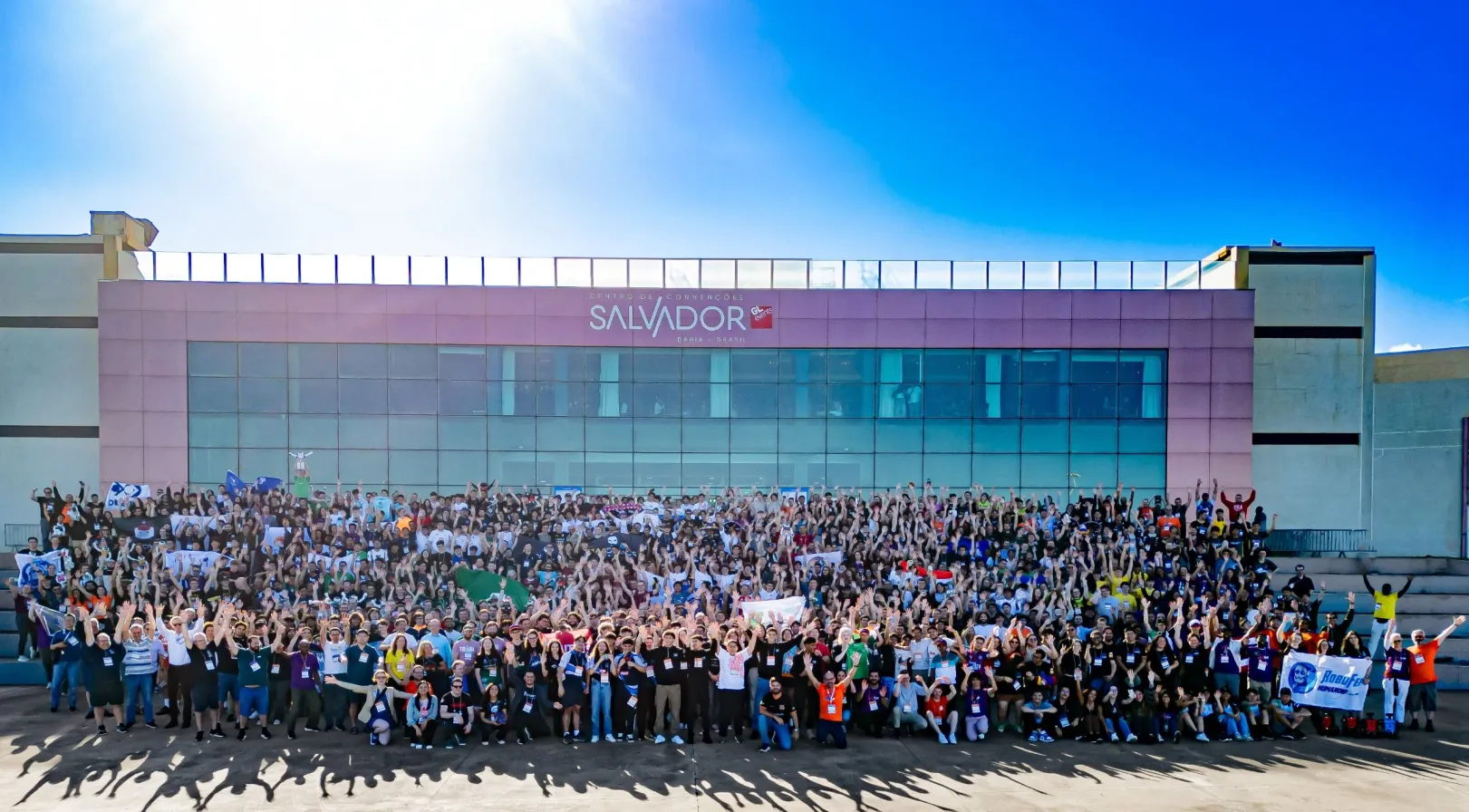
Besides our own games, we watched the games of other teams; the quarterfinal between Rhoban (France) and Boosted HTWK (Germany) was particularly interesting. There was also time for group photos, during which we briefly became a crowd attraction. So another exciting day came to an end, which, despite our elimination from the competition, went very positively for us. We made it into the top 8 of the Humanoid Kid Size league at RoboCup and placed 2nd in the Technical Challenges.